
CAUT
Academic Workers and the Rise of the [Smart] Machines
The growing use of artificial intelligence (AI) in postsecondary education can be expected to reshape academic work and deepen existing employment inequalities, according to a keynote presented during the Canadian Association of University Teachers’ (CAUT) Fair Employment Week. Sarah Ryan, a senior research officer at the Canadian Union of Public Employees (CUPE), discussed the implications of workplace AI and the role of unions in ensuring that technological change does not come at the expense of workers’ rights, job security or working conditions.
Ryan identified four key areas of concern: job loss and work restructuring, workplace surveillance, algorithmic management, and bias and discrimination. AI-enabled systems can influence hiring, scheduling, performance evaluation, task allocation and disciplinary decisions. When these systems operate without transparency or meaningful human oversight, workers have limited opportunities to understand or challenge decisions affecting their employment.
For postsecondary institutions, these risks extend beyond the potential automation of existing tasks. As academic staff face growing demands on their time, AI tools may seductively offer ways to manage workloads. However, if tasks traditionally performed by contract faculty or teaching assistants are automated or reassigned to technology, these efficiencies will worsen precarious employment and threaten bargaining-unit work.
TUFA has already taken steps to address these issues through collective bargaining. In the 2025–2028 collective agreement, TUFA negotiated specific language on generative AI and the adoption of new technologies, making our Association one of the first to secure AI-related protections in a collective agreement.
Article I.3.4 establishes that the use of generative AI by the employer, or Association members in the performance of their duties, must be consistent with the collective agreement, transparent to those affected, and subject to human oversight and accountability. It also makes clear that people who use AI tools remain responsible for the processes, decisions, and outcomes to which those tools contribute.
The agreement further requires the employer to provide TUFA Joint Committee with information, in sufficient time for consideration before adoption or acquisition, when proposed technological changes are likely to have a significant impact on members’ terms and conditions of employment or professional duties. It also protects members’ choice over whether, when, and how to use technologies, subject to the Agreement’s stated exceptions.
These provisions demonstrate how collective bargaining can establish accountability and consultation requirements as new technologies are introduced. They also provide a foundation for addressing questions about professional autonomy, intellectual work, and the future organization of academic labour.
Ryan emphasized that no single collective agreement clause can address every potential risk associated with AI. Unions should review existing provisions, identify gaps and consider how protections related to technological change, privacy, intellectual property, workload, discrimination, health and safety, discipline and job security can be strengthened.
She also called for stronger public regulation, greater transparency from employers and technology vendors, and assessments of potential bias before AI systems are implemented. Employers must remain accountable for decisions made with the assistance of these systems.
CAUT is developing resources to help member associations negotiate AI protections tailored to postsecondary workplaces. The keynote reinforced the importance of unions participating in decisions about how new technologies are introduced, rather than responding only after changes have affected members’ work.
As AI becomes more prevalent across universities, the challenge is not simply whether these tools can make academic work more efficient. It is crucial to consider who benefits from that efficiency, whose work may be displaced or intensified, and whether technological change will reinforce existing divisions between secure and precariously employed academic workers.
TUFA’s negotiated language is an important starting point. Continued attention to implementation, workload and employment impacts will be essential to ensuring that AI serves the academic mission without undermining the rights and working conditions of the people who sustain it.
Learn more about CAUT’s Fair Employment Now! campaign.
Solidarity
Protecting the Right to Strike and Bargain Collectively
Federal Bill C-39 proposes changes to the Canada Labour Code that would expand the federal Minister of Labour’s authority to intervene in labour disputes and end legal strikes. The legislation has raised concerns among labour organizations, including CAUT and the Canadian Labour Congress (CLC), about the future of meaningful collective bargaining and workers’ fundamental labour rights.
Although the proposed changes would apply to federally regulated workers, CAUT has warned that they could set a troubling precedent for provincial governments. Allowing governments to end legal strikes will weaken workers’ bargaining power, undermine confidence in the labour relations system and make negotiated settlements more difficult to achieve.
How you can take action
TUFA members can help defend the right to strike and bargain collectively by contacting their federal MPs and urging them to oppose the proposed expansion of Section 107 of the Canada Labour Code.
The Workers Together campaign provides background information on Bill C-39 and a tool for contacting MPs. You can also text RIGHTS to 55255 to access the campaign’s action tools.
Protecting collective bargaining means ensuring that workers and employers can negotiate fair agreements without the threat of government intervention undermining that process.
Support Students on November 5
On Thursday, November 5, students across Ontario will walk out of classes to protest tuition fee increases, OSAP cuts, and government interference in postsecondary education as part of the Hands Off Our Education! campaign.
TUFA encourages faculty and librarians to support students advocating for affordable, accessible, and publicly funded education. Rising tuition and reduced grants are increasing financial pressures on students, while funding cuts threaten academic programs, courses, and essential campus services. These challenges affect both students’ learning conditions and the working conditions of university employees.
How can faculty and librarians show their support?
- Respect students’ participation: Where possible, avoid penalizing students for participating in the walkout and communicate expectations around missed coursework or assessments.
- Spread the word: Share information about the November 5 walkout with colleagues and students.
- Show up in solidarity: Join students at the campus walkout!
- Listen and engage: Talk with students about their concerns and the importance of protecting accessible, publicly funded education.
The campaign calls on the Ontario government to provide grants instead of loans through OSAP, stop tuition fee increases, and halt government interference in admissions, research security plans, and student fees.
Students and university workers share a common interest in well funded institutions, strong academic programs, and accessible education. Supporting students is one way to stand together in defence of public postsecondary education.
Justice for Hassan Diab
Canadian academic, Hassan Diab, is again facing extradition to France despite a 2018 decision by a French court recognizing significant exculpatory evidence in his case and returning him to Canada. French prosecutors have now tried Dr. Diab in absentia on the basis of what was previously determined to be faulty and unreliable evidence.The Canadian Association of University Teachers (CAUT) has called on the Canadian government to prevent this second extradition of Dr. Diab whose initial case had raised serious concerns about extradition, due process, and the protection of individual rights. Read CAUT’s statement on the case here.
TUFA members are encouraged to support the latest call for action by signing an open letter to Prime Minister Mark Carney. The letter calls on the Government of Canada to refuse any future extradition request for Dr. Diab and to protect his rights as a Canadian citizen.
Dr. Diab’s case is a longstanding concern for CAUT and the broader academic community. Supporting this initiative is an opportunity to stand in solidarity with a fellow academic and reaffirm the importance of justice, human rights, and due process.
Sign the open letter to Prime Minister Mark Carney.
Watch video statements delivered at CAUT’s 2026 Council meeting. The speakers stand in solidarity with Dr. Diab and call on the Canadian government to refuse his extradition to France.
Stand in Solidarity with Part-Time Colleagues
Part-time faculty at Algoma University and the University of Ottawa are seeking fair collective agreements and improved working conditions. TUFA members are encouraged to support their academic colleagues by taking action.
Part-time faculty at Algoma University have been without a collective agreement for more than a year. TUFA members are encouraged to show their support for these faculty as they work toward a fair collective agreement.
Algoma’s part-time faculty play a vital role in the university’s academic community. Last-minute course cancellations and unpredictable employment disrupt students’ access to courses, while inadequate wages make it harder to retain experienced instructors. Our sessional colleagues in the Algoma University Faculty Association are seeking recognition and compensation when courses are cancelled, along with fair wages that reflect part-time faculty members’ contributions to the university.
Click here to send an email to Algoma University senior administration in support of a fair collective agreement.
The Association of Teaching Professors of the University of Ottawa (ATPUO) represents 2,500 contract academic staff who teach the majority of courses at the university. Following two days of conciliation, ATPUO has requested a no-board report, bringing the possibility of a strike deadline closer.
Click here to send a letter to the members of the University of Ottawa Board of Governors asking them to intervene and support good-faith negotiations toward a fair agreement.
Community
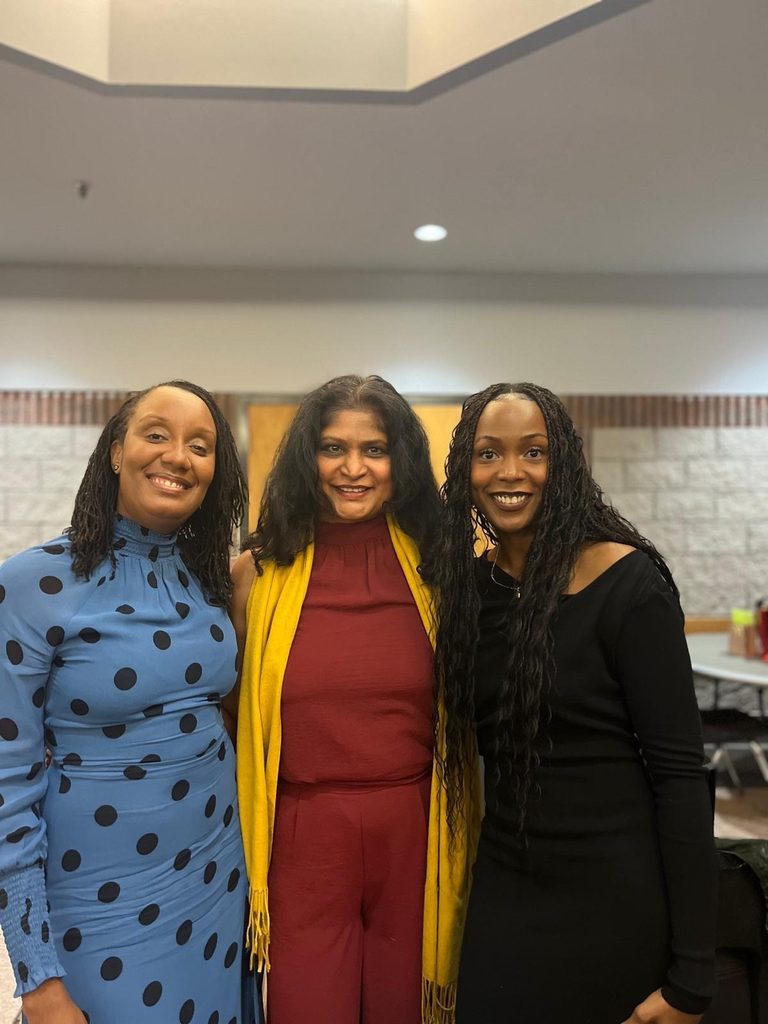
From left to right: Dr. Adwoa Onuora, Associate Professor of Sociology at Trent Durham and Coordinator of the Black Studies specialization, Rona Jualla Van Oudenhoven, Trent’s Director of Equity, Diversity, and Inclusion, and Beatrice Anane-Bediakoh, Assistant Professor, Department of Sociology.
TUFA Supports Canadian Jamaican Club of Oshawa’s 46th Anniversary
TUFA representatives attended the Canadian Jamaican Club of Oshawa’s 46th Anniversary Banquet on October 17, 2026, at the Ajax Community Centre. TUFA sponsored a table at the celebration, supporting the Club’s ongoing programs and its contributions to the community.
The evening brought guests together for a celebration featuring special guest artists and entertainment.